Deconstructing Faith
Leaving religion can feel like losing God. This article explores faith deconstruction, spiritual healing, and why the sacred feminine often feels like home again.

What faith Deconstruction Really is
Faith deconstruction is often misunderstood as losing belief. In truth, it is the courageous act of examining what you were taught and deciding what is still alive for you.
Deconstruction asks questions such as:
For many women, especially those raised in patriarchal religious systems, deconstruction is not optional. It is survival. When a faith tradition teaches you to distrust your body, your intuition, or your lived experience, something inside eventually pushes back.
That push is not a failure of faith. It is a signal of awakening.


Why the Sacred Feminine Feels Like Home After Deconstruction
For women healing from religious harm, goddess spirituality often feels less like something new and more like something remembered.
Goddesses do not demand perfection. They do not require belief before belonging. They meet you where you are, in your grief, your anger, your desire, and your becoming.
Isis gathers what has been torn apart and makes it whole again.
Hathor reminds us that joy, pleasure, and devotion are not opposites.
Mary Magdalene stands as witness, not judge, honoring love and truth even when institutions deny them.
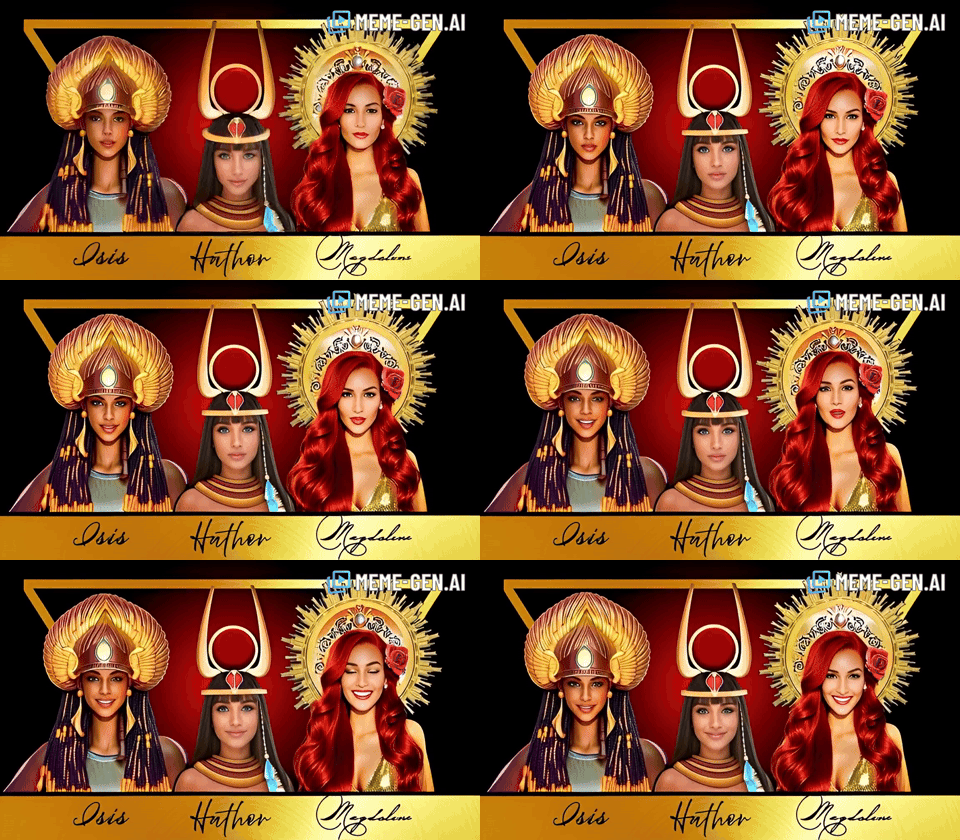
The sacred feminine does not ask women to transcend their humanity. She sanctifies it.
This is why so many women who deconstruct faith do not become empty or lost. They become rooted. They form personal relationships with the sacred that are embodied, intuitive, and alive.

From Obedience to Relationship
One of the most profound shifts in deconstruction is the movement away from obedience-based spirituality toward relationship-based spirituality.
Religion often teaches compliance. Goddess-centered spirituality teaches connection.
Instead of asking, “What am I allowed to do?” the question becomes, “What feels true in my body and soul?”
Instead of fearing punishment, women begin listening for wisdom.
This does not mean rejecting all structure or tradition. It means reclaiming agency. It means choosing devotion over fear and intimacy over hierarchy.
A Practical Practice: Reclaiming the Sacred in Your Own Language
This simple practice can help you reconnect with spirituality without doctrine.
You will need
- A quiet space
- A journal or piece of paper
- An image or symbol that feels sacred to you, a goddess image if you have one, or simply a candle
The Practice
- Sit comfortably and place the image or candle in front of you.
- Take three slow breaths, letting your body soften.
- Place one hand on your heart and one on your belly.
- Say out loud or silently:
“I release the versions of God that required me to abandon myself.” - Ask gently:
“What does the sacred feel like to me now?” - Do not force an answer. Notice sensations, emotions, or images.
- Write freely for five minutes without censoring yourself.
There is no right response. The goal is not belief, but relationship.
Over time, this practice helps you build a spiritual language that belongs to you, one rooted in presence rather than fear.
You do not need to return to the old temple to find the divine.
You are already standing on sacred ground.

Vintage Isis Racerback Tank, Egyptian Goddess Top, Women’s Workout Apparel, Summer Fashion, Unique Gift for Her
Price range: $19.77 through $23.15Vintage Hathor Racerback Tank, Egyptian Goddess Top, Women’s Workout Apparel, Summer Fashion, Unique Gift for Her
Price range: $19.77 through $23.15Egyptian Goddess Hathor Portrait Tee — Women’s Softstyle T-Shirt
Price range: $15.31 through $28.21Isis Greeting Card
Price range: $6.60 through $23.27Vintage Mary Magdalene Racerback Tank, Goddess Top, Women’s Workout Apparel, Summer Fashion, Unique Gift for Her
Price range: $19.77 through $23.15Hathor Softstyle T-Shirt
Price range: $26.25 through $30.48Strength of Hathor Muscle Shirt
Price range: $22.00 through $24.50Greeting Cards Five Pack
$24.25Mary Magdalene Softstyle T-Shirt
Price range: $26.25 through $30.48Hathor Goddess Graphic Flowy Tank Top – Bohemian Style, Summer Tee, Festival Wear, Gift for Her, Casual Outing
$24.25Isis Goddess Graphic Flowy Tank Top – Bohemian Style, Summer Tee, Festival Wear, Gift for Her, Casual Outing
$24.25Goddesses of the Rose Lineage Postcard
$3.50Egyptian Pharaohs Graphic Crop Tee – Isis and Osiris
Price range: $37.73 through $41.75Beautiful Goddess Trinity sticker
Price range: $3.00 through $3.50Mary Magdalene Bible Cover
Price range: $14.93 through $18.65Mary Magdalene Hand-Painted Artwork Women’s Tee
Price range: $15.31 through $28.21Isis Softstyle T-Shirt
Price range: $26.25 through $30.48Goddess Isis Hand-Painted Portrait Women’s Tee
Price range: $15.31 through $28.21Hathor Is My Goddess Ringer Tee
Price range: $18.06 through $19.89Mary Magdalene Goddess Graphic Flowy Tank Top – Bohemian Style, Summer Tee, Festival Wear, Gift for Her, Casual Outing
$24.25


